EN
What Terrain Can Offroad Crawler Remote Control Lawn Mower Pass Through
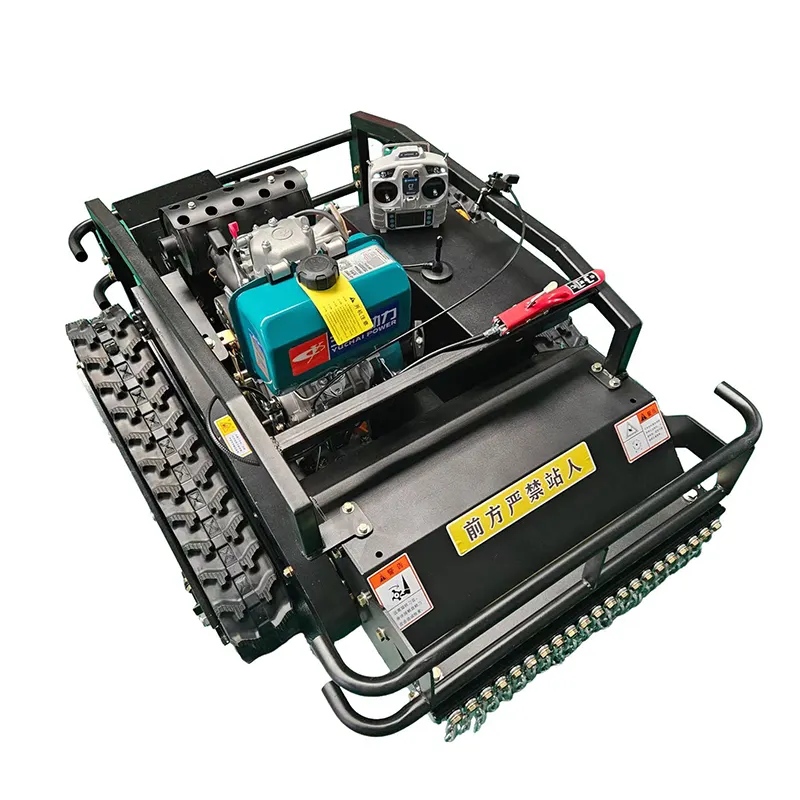
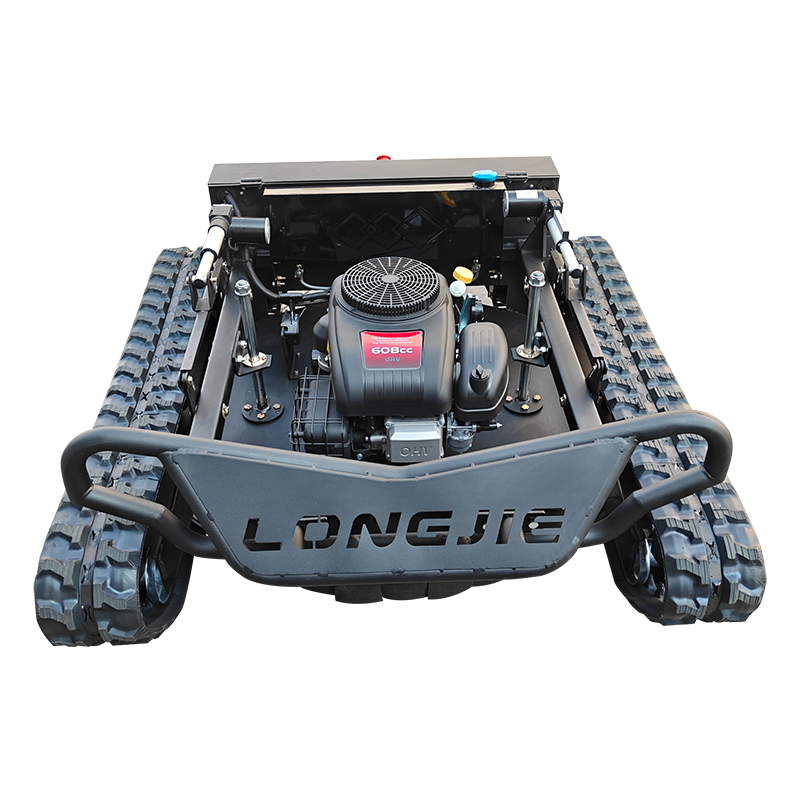
A crawler remote control lawn mower can be a practical option for vegetation work where walking behind a machine or riding on it would put an operator too close to a slope, rough ground, or dense growth. But “offroad” is not a blank check. The right question is not whether a crawler remote control lawn mower can cross a difficult-looking site; it is whether the ground, vegetation, route, weather, and model-specific limits make that route suitable for controlled mowing.
From a remote mower technical perspective, terrain assessment starts with traction and ends with safe recovery. A crawler undercarriage may distribute load differently from wheeled equipment and can help on uneven ground, yet grip changes with soil, moisture, side slope, grass cover, and debris. Use the operating manual and the manufacturer’s stated slope, ground-clearance, and operating limits for the exact machine.
Start With the Terrain Categories, Not the Product Label
It is tempting to describe every hillside as an offroad job. A better approach is to divide the property into work zones and assess each one separately. A crawler remote control lawn mower may be appropriate for one section while another requires trimming, drainage work, obstacle removal, or a different maintenance method.
| Terrain or condition | What to check before mowing | Typical decision |
|---|---|---|
| Firm, relatively even grass | Ruts, hidden stones, curb edges, drainage covers, and the planned turning area | Often the most straightforward zone, subject to the model’s instructions and a clear route. |
| Rolling or uneven ground | Undercarriage clearance, abrupt crests, holes, side tilt, and loss of remote line of sight | Work only after a slow walk-through identifies a route that avoids sudden pitch changes. |
| Slopes and embankments | Measured slope angle, surface condition, direction of travel, runout area, and the model’s rated limit | Potentially suitable only within the documented machine limit and site-specific safety plan. |
| Rough scrub or tall grass | Stem thickness, concealed debris, wire, rocks, stumps, and whether material can wrap around moving parts | Inspect and clear hazards first; vegetation height alone does not prove passability. |
| Wet, muddy, or loose soil | Wheel or track sinkage, drainage paths, erosion, sliding risk, and recovery access | Usually a pause-and-reassess condition, especially on slopes or near water. |
| Ditches, banks, drop-offs, and water edges | Ground collapse risk, hidden voids, approach angle, stopping distance, and exclusion zone | Set a no-go boundary unless the manufacturer and a competent site assessment explicitly support the task. |
Firm Grass, Fields, and Orchard Rows
Short or moderate grass over firm soil is generally easier to assess than an unmanaged area because changes in ground level are more visible. Even then, look for drainage channels, irrigation fittings, root flare, stones, utility covers, and narrow passages before starting. The machine needs room not only to travel forward but also to turn, stop, and reverse without entering an unsafe edge zone.
For orchard rows or managed fields, spacing matters as much as surface condition. Confirm the actual width between trunks, posts, and supports; check that hanging branches or wires cannot interfere with the machine or block the operator’s view. If the route requires repeated tight turns around fixed objects, map those turns during the inspection rather than discovering them during cutting.
Uneven Ground, Ruts, and Low Obstacles
A crawler remote control lawn mower is often considered for uneven ground because tracked travel can be useful where a surface is not perfectly flat. Still, a deep rut, sudden mound, buried rock, stump, or sharp breakover point can create a different problem: loss of stability, deck contact, thrown debris, or a machine that cannot reverse cleanly. The useful test is not “Can it get across once?” but “Can it cut, turn, stop, and exit repeatedly with margin?”
Walk the intended route before each new work area. Mark or remove visible hazards, and treat tall grass as concealment rather than proof that the ground is smooth. If soil has recently been filled, eroded, frozen, or saturated, re-check it; conditions that looked manageable during a dry inspection can change after rain.
Slopes: Confirm the Exact Machine Limit First
Slopes are where generic advice becomes unreliable. A crawler remote control lawn mower may be designed for sloped vegetation management, but maximum slope capability is specific to the model, its configuration, the ground surface, the direction of travel, and the instructions supplied by its manufacturer. Do not borrow a number from another mower, a video, or a marketing claim.
As conservative context, OSHA advises that mower operators should not work beyond the slope angle specified by the manufacturer. Its riding-mower guidance also notes that, when no angle information is available, terrain must be evaluated and slopes over 15 degrees should be avoided. That is not a rating for a crawler remote control lawn mower; it reinforces why the manual for the actual machine comes first.
Measure the slope rather than estimating it by eye. Then check for wet grass, loose gravel, exposed roots, sidehill bumps, drainage paths, and a safe area at the bottom of the route. A slope within a published limit can still be unsuitable when the surface is slippery, the ground is rutted, or the operator cannot maintain clear observation.
Where a Crawler Mower Should Not Simply “Push Through”
Remote operation creates distance from the cutting area; it does not remove the need for a controlled work zone. Stop and reassess when the route includes standing water, soft mud, unstable fill, a ditch edge, a retaining-wall edge, a culvert, unknown underground voids, dense hidden debris, or an area where people, animals, or vehicles can enter unexpectedly.
Likewise, do not use a crawler remote control lawn mower to cross obstacles that the manufacturer has not approved. Logs, large rocks, curbs, steep steps, deep channels, and exposed utility infrastructure can damage the machine or create an uncontrolled recovery situation. If recovery would require pulling from an unsafe position, the route was not a suitable work route.
Make a Site Check Before Every Job
- Read the exact model documentation. Confirm permitted slope, operating surface, cutting conditions, controls, shutdown procedure, and maintenance checks.
- Walk the site. Identify ruts, debris, holes, drainage features, overhead hazards, access routes, and places where the machine must turn.
- Assess weather and soil. Rain, dew, loose topsoil, frost, and recent grading can change traction and stability.
- Set boundaries. Keep people, pets, traffic, and bystanders away from the operating area; protect drop-offs and water edges with a clear exclusion zone.
- Plan the route and recovery. Decide where the machine enters, works, turns, exits, and can be safely stopped. Do not improvise a recovery path after traction is lost.
- Test cautiously. Start on the least demanding portion of the site, verify response and visibility, and stop if the behavior differs from the planned condition.
Questions to Confirm With a Supplier
Before choosing a crawler remote control lawn mower for an offroad property, provide the supplier with measured slope angles, photos or video of the route, soil condition, grass type and height, obstacle details, available access width, expected work frequency, and local safety requirements. Ask for the applicable operating manual, exact configuration details, supported terrain conditions, service guidance, and a written explanation of any limitation that affects the job.
Shandong Maide En Intelligent Technology Co., Ltd can use a terrain-and-task checklist to structure an equipment discussion. The most useful discussion is evidence-based: define the site, compare documented capability with the intended task, and keep unverified claims out of the decision.
Conclusion
A crawler remote control lawn mower may pass through firm grass, uneven fields, managed rows, and some slopes when the model is designed for those conditions and the site is properly assessed. It should not be treated as a substitute for terrain inspection, manufacturer limits, operator training, or a controlled exclusion zone. Choose by the toughest confirmed condition on the route, not by the easiest part of the property, and pause whenever traction, visibility, ground stability, or recovery access is uncertain.