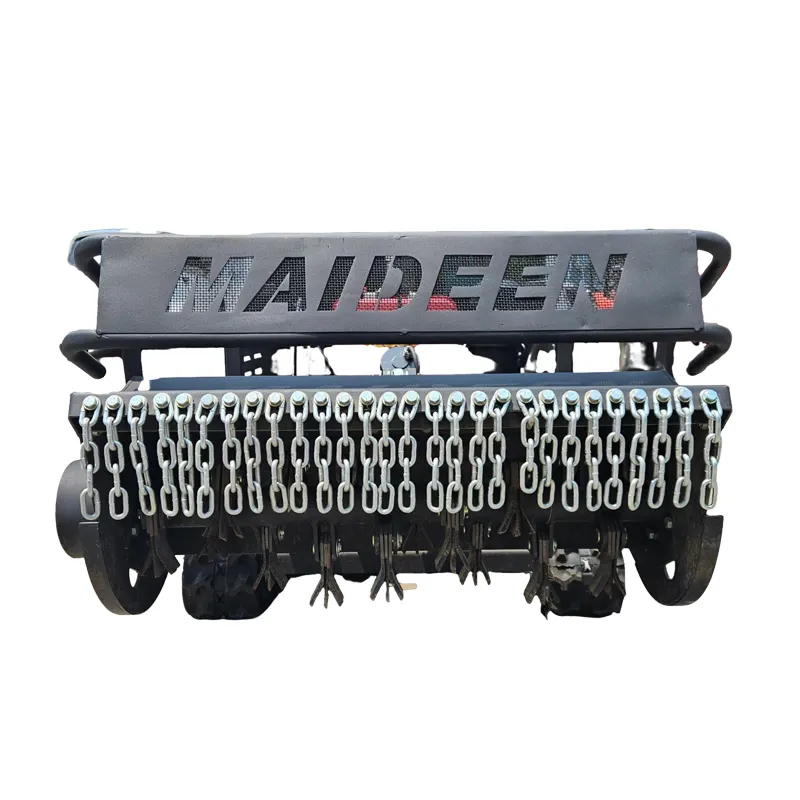
EN
What Fuel Consumption Level Does Remote control petrol lawn mower Reach
Buyers often ask for one number before comparing gasoline lawn mowers: how much fuel does a remote-control petrol machine use? The useful answer is not a single universal figure. A remote control petrol lawn mower can use fuel very differently on a maintained lawn, a steep bank, a rough orchard floor, or dense overgrowth. As a practical planning reference, broad mower guidance sometimes places large petrol mower consumption around 1.5–3.0 litres per hour under load, but that range is not a specification for every machine. It is a starting point for asking better questions.
From a remote-mower technical perspective, fuel consumption should be assessed through engine load, productive mowing output, terrain, and operating method. In other words, the right comparison for gasoline lawn mowers is not simply litres per hour; it is whether the machine completes the required area and vegetation condition safely and predictably for the fuel used.
Start with the correct fuel-consumption unit
For ordinary gasoline lawn mowers, a seller may quote hourly consumption because it is easy to understand. For a remote control petrol lawn mower used across larger or more difficult sites, ask for two readings:
- Litres per hour (L/h): useful for estimating runtime, refuelling intervals, and the likely daily fuel requirement.
- Litres per productive area: such as litres per hectare or per acre, useful for comparing machines that work at different widths, speeds, and cutting conditions.
A machine that consumes more fuel each hour is not automatically the less efficient option. If it cuts a wider path, maintains speed on a safe slope, and needs fewer passes, its fuel per completed area may be lower. That is why gasoline lawn mowers should be compared with a common job description rather than an isolated engine figure.
Why a remote mower’s fuel use can change sharply
Vegetation load and cutting height
Thick, wet, tall, or tangled vegetation makes the blade system and engine work harder. A remote control petrol lawn mower clearing growth that has been left for several weeks will normally consume more fuel than the same machine making a regular maintenance pass. Before asking for a consumption estimate, define grass height, stem thickness, moisture, cutting height, and whether the task includes light brush rather than lawn grass. A parameter-first comparison can be misleading. Put the engine rating back into the actual mowing condition.
Slope, surface, and traction demand
Remote equipment is often considered for slopes, uneven ground, orchard rows, and areas where walking beside a mower would be inconvenient or unsafe. Those conditions change rolling resistance and traction demand. A steep or soft surface may raise fuel use even when the cutting deck is lightly loaded. When comparing gasoline lawn mowers, request the consumption condition together with the stated grade, surface type, travel speed, and whether the work involved repeated turns or long straight runs.
Travel speed and route planning
High travel speed does not necessarily mean better fuel economy. If the mower moves too quickly for the vegetation, the deck may leave uncut strips or require a second pass. At the same time, excessive turning, unnecessary repositioning, and long no-cut travel reduce productive output. For a remote control petrol lawn mower, route planning matters because the operator can match travel speed and overlap to the site instead of treating every patch of ground alike.
Engine condition and routine maintenance
Fuel use is also an operating and maintenance issue. A clean air filter, correctly serviced cutting system, sound belt or drive components, suitable fuel, and blades in proper condition help the engine work within its intended range. Worn blades can tear rather than cut, increasing load and leaving a poorer finish. When evaluating gasoline lawn mowers, separate the engine’s quoted consumption from avoidable losses caused by maintenance or setup.
A realistic reference range—and its limits
The 1.5–3.0 L/h orientation sometimes cited for larger petrol mowing equipment can help a buyer set an initial budget, but it should not replace a model-specific quote or demonstration. Smaller walk-behind units, larger ride-on machines, tracked remote mowers, and machines working in brush are not interchangeable categories. A remote control petrol lawn mower may sit above or below a general range depending on engine displacement, transmission design, cutting system, working gradient, and workload.
The more useful question is: What fuel level does this specific machine reach during our defined task? Ask the supplier to identify the tested or expected condition. If no documented test is available, treat the figure as an estimate and build a margin into daily fuel planning. That conditional approach is more useful than suggesting that all gasoline lawn mowers will achieve the same result.
How to compare gasoline lawn mowers before purchase
Start by turning the job into a short checklist. It may feel natural to compare displacement first, but slope and obstacles can change the decision just as much.
- Map the site: record area, slope range, ground firmness, obstacles, access points, and turning zones.
- Describe the vegetation: include average and maximum height, density, wet or dry conditions, and the desired cut frequency.
- Define productive output: state the area to be completed per hour or per day, not just the engine runtime.
- Request comparable fuel data: ask each supplier for L/h and, where possible, fuel per completed area under the same task assumptions.
- Confirm the operating boundary: verify what slope, terrain, and vegetation conditions the quoted figure represents.
- Plan maintenance: ask about blades, filters, drive components, service intervals, and the availability of support information.
Breaking mowing into preparation, active work, and a post-work inspection makes the configuration easier to judge. It also helps a purchasing team see whether a remote machine is being selected for actual terrain and workload rather than for an attractive headline number.
Using fuel data to plan daily work
Once you have a credible L/h estimate, multiply it by expected engine-on time and add a sensible operational allowance for terrain changes, repositioning, or heavier patches. Then compare that plan with the area actually completed. Over several work cycles, a site team can record fuel added, hours run, weather, vegetation condition, and completed area. This produces a local baseline that is more useful than a generic internet claim for gasoline lawn mowers.
For example, a site with consistent grass and predictable routes may produce stable records. A site with seasonal growth, rain-softened ground, or mixed brush will naturally show wider variation. The aim is not to force every remote control petrol lawn mower into one consumption number; it is to understand what changes the number and to plan around those conditions.
Questions to ask a remote mower supplier
- What operating condition was used for the stated fuel-consumption figure?
- Is the figure measured per hour, per area, or both?
- What vegetation height, ground condition, and slope were assumed?
- Does the estimate include transport across the site and turns, or cutting time only?
- What maintenance steps most affect consumption and cutting performance?
- Can the configuration be reviewed against our site photos, slope information, and work frequency?
Conclusion
There is no honest one-size-fits-all fuel figure for gasoline lawn mowers, especially when remote operation, slopes, rough ground, and variable vegetation are involved. A broad hourly range can support early planning, but a sound purchase decision comes from matching fuel consumption to a defined work scenario. Compare L/h with fuel per productive area, document the terrain and vegetation assumptions, and confirm maintenance needs before finalising a machine. That process turns fuel consumption from a vague sales question into a practical operating decision.