EN
What Terrain Is RC Car Mower Most Suitable For?
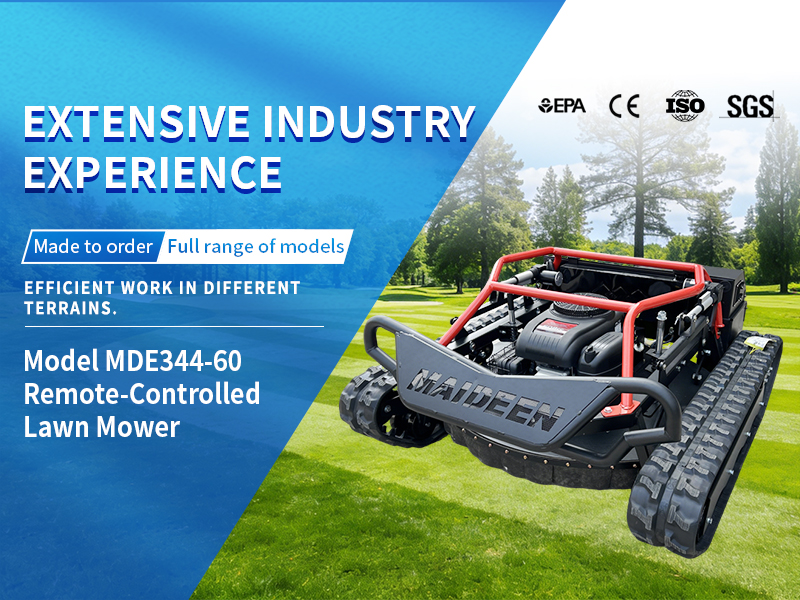
An rc lawn mower is most useful where walking behind a machine or sitting on a conventional mower adds unnecessary exposure, fatigue, or route-planning difficulty. The strongest fit is not simply “any rough ground.” It is a site where the slope, surface, vegetation, access route, and exclusion zones have been checked against the manufacturer’s instructions for the specific machine. From a landscape-equipment selection perspective, terrain comes before a feature list.
A remote-controlled mower can let the operator stand away from the cutting path, which is valuable on awkward banks and difficult edges. Still, a remote control does not remove the need for traction, visibility, training, and a safe stopping distance. An rc car mower should be chosen for verified working conditions, not for a broad all-terrain claim.
Terrain Where an RC Lawn Mower Usually Makes the Most Sense
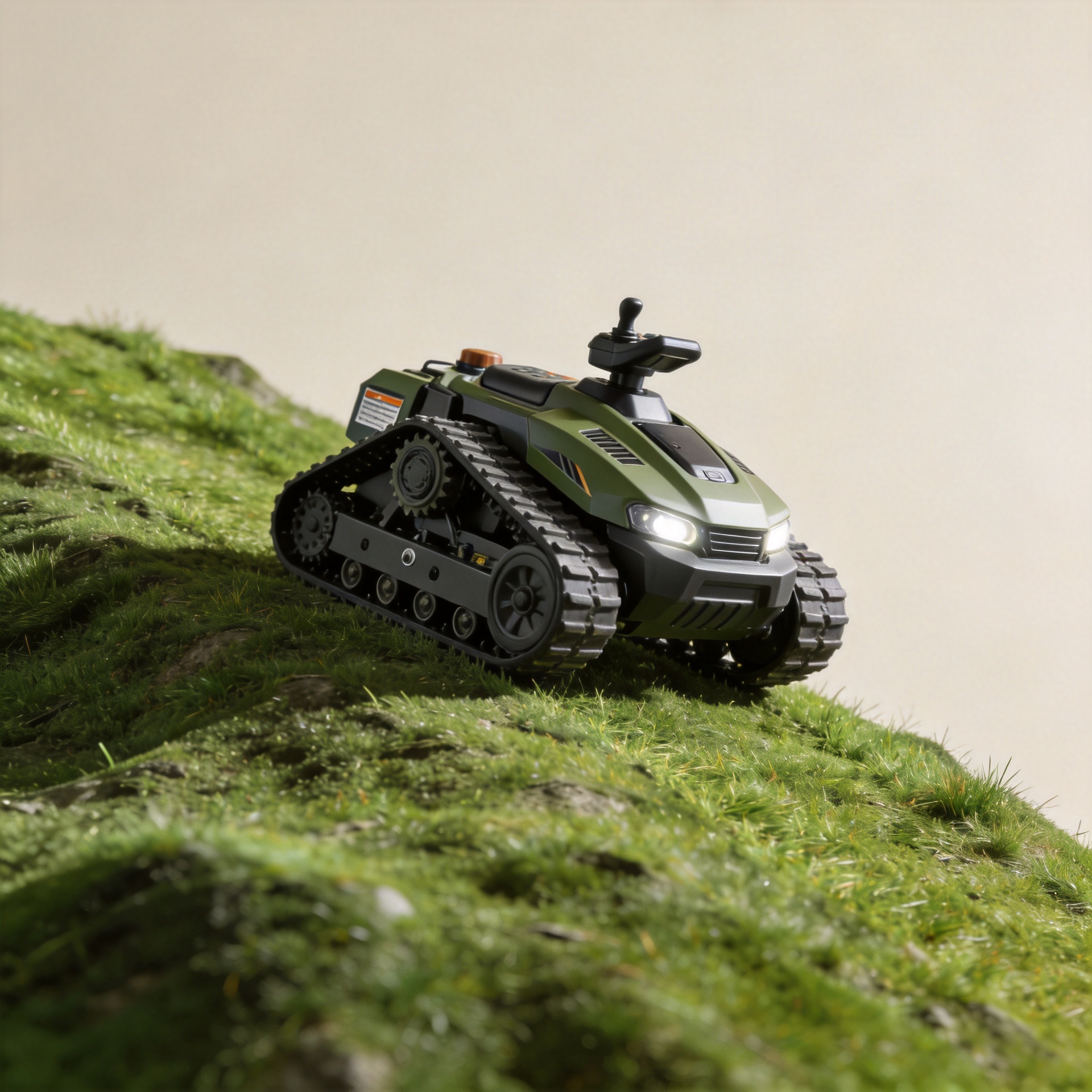
An rc lawn mower is often a practical candidate for maintained slopes, rolling ground, and areas with restricted access. These are jobs where the ground can be inspected, the route can be planned, and the selected model has an approved slope rating for the actual surface condition. A bank with firm turf is different from the same bank after rain, and both are different from loose soil, stones, ruts, or cut vegetation left on the route.
General safety guidance for conventional riding mowers also illustrates why terrain-specific equipment is evaluated for steeper work: OSHA emphasizes following manufacturer angle limits and describes slopes of 22 degrees and above as an application for specialized equipment rather than ordinary riding mowers. That is context, not a universal rating for an rc lawn mower. The safe limit remains the limit in the manual for the exact machine, attachment, tires or tracks, and operating conditions.
1. Stable slopes with a clear route
A stable grass slope can be a good application for an rc lawn mower when the grade is within the stated limit, the surface provides predictable traction, and the operator can maintain a clear view. Remote operation may reduce the need for a person to stand in the most exposed part of the slope. Before work, check the angle with an appropriate measuring method, walk the route, and identify where the machine will turn, stop, and exit.
Do not assume that a published maximum angle applies to every direction of travel or every weather condition. Turning, braking, wet grass, loose clippings, and soil changes can affect stability. If the planned work approaches a machine’s operating limit, treat that as a reason for a site-specific review rather than a reason to push the limit.
2. Uneven ground that is firm rather than unpredictable
An rc lawn mower can suit rough but manageable terrain such as rolling turf, orchard lanes, field margins, or maintained utility areas when holes, rocks, roots, and hidden drop-offs have been addressed. The point is not that the site looks rugged; it is that the ground is sufficiently known for the selected machine to travel and cut predictably.
Start with a route check. Mark culverts, sharp depressions, exposed roots, stumps, irrigation hardware, and soft patches. Confirm approach and turnaround room as well as the mowing path. An rc car mower needs an accessible entry route and a recovery plan if it loses traction or encounters an obstacle. If a worker cannot clearly see the machine’s path from a safe operating position, the area needs a different plan.
3. Boundaries that are hard to reach on foot
Roadside verges, retention-basin banks, fence lines, orchard boundaries, and similarly awkward strips may be suitable for an rc lawn mower when there is a controlled work zone. These areas can make remote operation attractive because the operator does not need to follow the machine into every tight or sloped section. Yet access alone does not establish suitability. Traffic, pedestrians, water, blind corners, and thrown-object risk must be assessed first.
Set an exclusion area and remove loose debris before starting. Keep people, animals, and vehicles out of the operating zone. Near water, drainage channels, or a steep edge, establish a conservative setback based on the site and the machine documentation. An rc lawn mower must not be used as a shortcut around a hazard that has not been controlled.
Terrain That Needs Extra Caution or May Be Unsuitable
Wet, muddy, frozen, or loose surfaces deserve extra caution because traction and braking behavior can change quickly. Tall, dense brush can also hide obstacles and make it harder to see whether the machine is following a safe route. For an rc lawn mower, a surface that is acceptable while dry may be unsuitable after rain, after irrigation, or after heavy cutting debris accumulates.
Avoid treating ditches, embankment edges, rock piles, unstable fill, deep ruts, and areas with concealed wire or debris as routine terrain. These conditions can require a different tool, a revised route, or professional site assessment. The same applies where radio-control range, line of sight, or emergency-stop access is compromised. An rc car mower is not automatically suited to every difficult landscape.
Match the Machine to the Ground, Not the Other Way Around
Instead of beginning with horsepower or a headline slope claim, turn the job into a short verification list:
- Measure the steepest section and compare it with the exact model’s approved operating limits.
- Record surface condition: dry or wet, firm or soft, smooth or rutted, and clear or obstructed.
- Map access, turning space, stopping points, escape routes, and any edge hazards.
- Assess grass height and density without assuming that a general rc lawn mower description confirms cutting capability.
- Confirm line of sight, operator training, communication, emergency-stop procedure, and exclusion-zone controls.
- Review the operating manual and ask the supplier to confirm which configuration fits the documented terrain.
This sequence is more useful than comparing isolated specifications. In fact, a moderate slope with wet turf and a blind turn can deserve more caution than a steeper, dry, open bank. Put operating conditions first, then compare traction system, cutting configuration, guarding, and control features.
Questions to Send with an Inquiry
For a meaningful recommendation, share the site’s maximum measured slope, photos or a route sketch, typical grass height, soil and moisture conditions, obstacles, access width, and required work frequency. Ask which configuration is approved for those conditions, what training and maintenance are required, and which restrictions appear in the operating documentation. Shandong Maide En can use this kind of terrain-and-task information to structure an rc lawn mower selection discussion rather than making an unsupported performance promise.
Conclusion
Suitable terrain for an rc lawn mower is controlled, inspectable, and within the specific machine’s documented limits: stable slopes, firm uneven ground, maintained orchard or field edges, and hard-to-reach boundaries are common examples. The decision depends on more than terrain alone. Confirm surface condition, vegetation, obstacles, route visibility, and safety controls before deployment. When those checks are clear, an rc car mower can be considered as part of a safer, more deliberate mowing plan.