EN
Where Do Agricultural mowers Get Widely Applied On Farms
On a working farm, lawn mowers are not just for keeping a building frontage tidy. The same broad equipment category can support vegetation control around productive areas, access routes, livestock boundaries, and farm infrastructure. The useful question is not simply where lawn mowers can travel; it is whether the terrain, growth, route, and operating rules make the task appropriate for a particular machine.
A practical farm-equipment conversation starts with the work zone, not a model name. A smooth, regularly cut grass strip has different demands from a wet orchard lane, a rough field edge, or a drainage corridor with concealed obstacles. That matters because agricultural mowers should be selected for the job and the site conditions, rather than acreage alone.
1. Farm entrances, buildings, and service yards
Farm entrances, office surroundings, storage yards, workshop approaches, and staff parking edges are among the most familiar places for lawn mowers. These areas often need frequent, presentable maintenance, but they also contain parked vehicles, doors, pedestrians, cables, pallets, and narrow turns. For that reason, an appropriate use of lawn mowers here begins with a route check: identify low branches, blind corners, loose material, and places where people may enter the work area.
Short, maintained grass around buildings can make inspection routes and access points easier to see. Still, it is not a reason to treat the yard as risk-free. Clear the surface first, establish an exclusion zone, and follow the machine instructions and local site rules. If a farm uses remote-control equipment, the operator still needs a clear view, a planned stopping point, and a safe position outside the machine path.
2. Orchard and vineyard lanes
Orchard rows and vineyard alleys are a common agricultural application for lawn mowers when vegetation must be managed between planted rows or along turning areas. The goal is usually orderly ground cover and passable lanes, not a decorative lawn. Here, row width, tree guards, irrigation components, trellis posts, fruit drop, ruts, and headland space all change the decision.
Lawn mowers may suit a lane with stable ground, known obstacles, and a repeatable travel pattern. They may be less suitable when vegetation is too dense, the ground is soft, or low hardware and uneven ground cannot be safely cleared. Before routine work begins, walk or inspect the route and confirm clearance requirements with the equipment supplier. In orchard work, a well-defined route is often more valuable than adding features that do not address the actual obstacles.
3. Pasture margins and grazing-area upkeep
Pastures can also create periodic mowing tasks. USDA Natural Resources Conservation Service pasture materials describe mowing among the cultural treatments that may be used as part of pasture renovation and management. In practice, lawn mowers can be considered for accessible margins, gateways, around water points, and other managed grass zones when the farm’s vegetation plan calls for it.
That does not mean lawn mowers are a universal pasture-management answer. Species composition, grazing timing, wildlife considerations, ground conditions, and the presence of rocks or debris all need attention. Mowing can be one tool within a wider plan, rather than a substitute for agronomic advice or site-specific weed control. If weeds are a concern, define the target area and the desired management result before choosing a mowing schedule.
4. Field borders, headlands, and access tracks
Field borders and headlands often need vegetation control so that people and equipment can move predictably. Along suitable, surveyed areas, lawn mowers may help maintain grass on access tracks, turn zones, fence approaches, and buffer strips. The practical benefit is a route that can be checked and managed at regular intervals rather than allowed to become an unknown obstacle zone.
However, these places deserve an inspection before lawn mowers enter them. Ditches, culverts, fence wire, hidden stumps, soft shoulders, and changing field entrances can turn a simple pass into a hazardous task. Mark fixed hazards, keep an appropriate distance from edges, and avoid assuming last month’s route is safe today. Seasonal growth and recent weather can materially change traction and visibility.
5. Drainage corridors, pond edges, and difficult ground
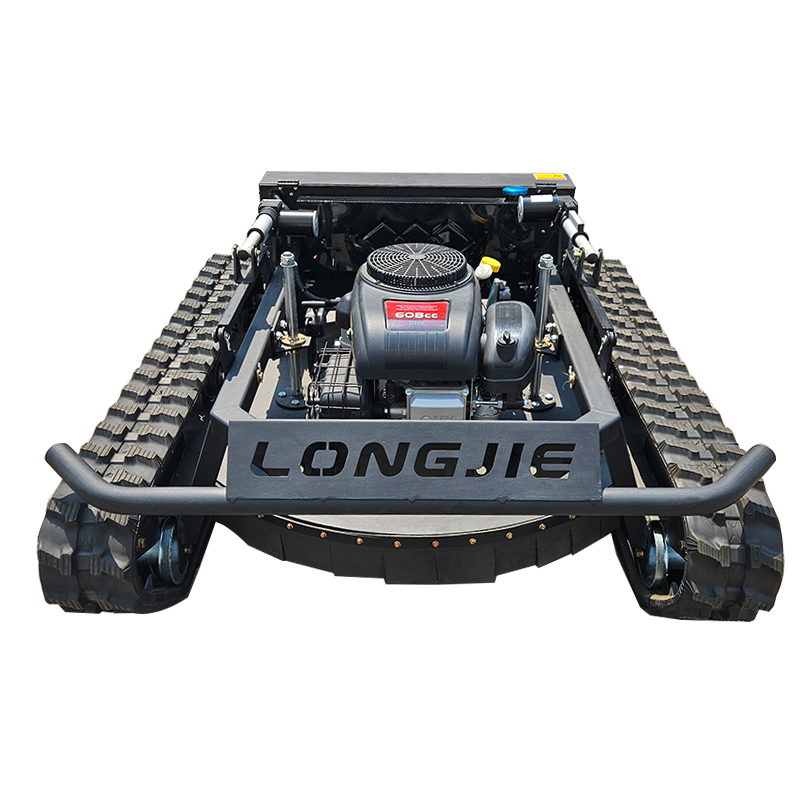
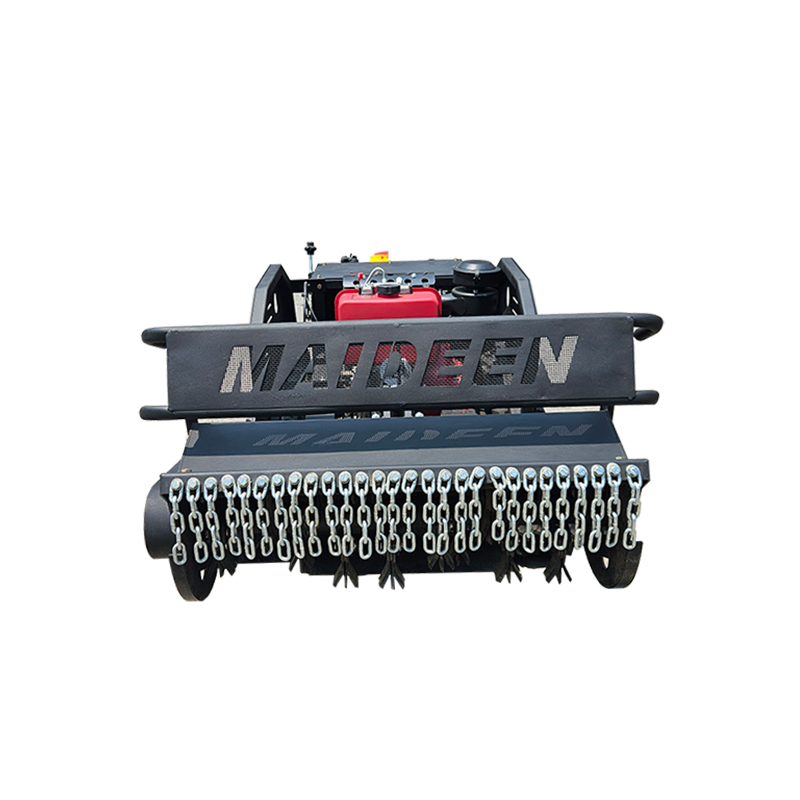
Some farms look to lawn mowers for drainage channels, retention-pond surrounds, embankments, and slopes where walking with handheld equipment is tiring or exposes people to risk. These can be valid application areas only after a conservative assessment. A remote-control mower may allow an operator to stay away from the immediate cutting path, but it does not remove the need for training, manufacturer limits, surface checks, and an emergency-stop plan.
For slopes, the question is not whether lawn mowers are generally capable; it is whether this machine is approved for this gradient, surface, vegetation, and direction of travel. Wet grass, loose soil, holes, drop-offs, and obscured drainage structures require a reassessment. Do not replace the manufacturer’s operating guidance with a generic farm rule or treat remote operation as permission to mow terrain that has not been evaluated.
6. Perimeter zones and solar, irrigation, or utility areas
Perimeter fencing, solar installations, irrigation stations, and utility buildings may have managed grass areas that need controlled upkeep. In these locations, lawn mowers can support visibility and access if the route has adequate clearance and the asset owner’s safety requirements are known. The work plan should specify no-go areas around cables, panels, valves, supports, and service covers.
For agricultural mowers, this is a good example of why task mapping comes first. Two sites with the same acreage can have very different risk profiles. One may have open, level grass; the other may have close-set structures and restricted turning space. Ask who controls the area, what may be hidden beneath vegetation, and what shutdown procedure applies before scheduling the job.
A farm-use checklist before choosing lawn mowers
Before allocating lawn mowers to a farm zone, document the following:
- Surface: slope, ruts, soft ground, drainage features, and traction changes.
- Vegetation: grass height, density, woody growth, and material that may need another method.
- Obstacles: trees, posts, wires, irrigation parts, rocks, culverts, and low structures.
- Route: entry, turning areas, visibility, stopping points, and safe operator position.
- People and animals: exclusion zones, livestock movement, visitors, and nearby workers.
- Verification: manufacturer guidance, required training, maintenance needs, and local procedures.
The checklist helps avoid a familiar mistake: choosing lawn mowers based only on nominal cutting area. A mower that is sensible for a regular service yard may not be appropriate for an orchard lane or a slope. Likewise, agricultural mowers should be compared against the task conditions, not presented as a single solution for every farm.
Conclusion: match the mower to the managed zone
Lawn mowers are widely applied on farms around buildings, orchards, pasture margins, field access routes, managed perimeter zones, and certain inspected slopes. Their usefulness depends on a repeatable route, manageable vegetation, confirmed machine suitability, and safe operating controls. Start by dividing the farm into work zones, then confirm the ground, obstacles, access, and operating requirements for each one.
For buyers evaluating agricultural mowers, a supplier discussion is more productive when it includes photos or measurements of the site, the vegetation condition, slope and route information, expected work frequency, and the safety procedures already in place. That evidence-based approach makes it easier to determine where lawn mowers fit the farm plan—and where another maintenance method should be considered.